A trusted business law firm in McKinney, TX.

Blog

Blog

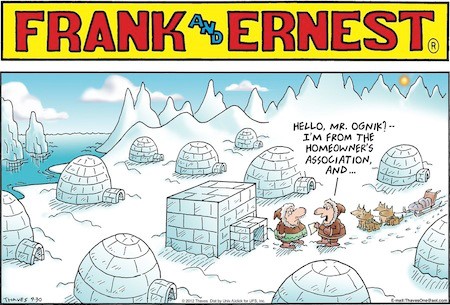
Top 5 Reasons Why I Love Being a Lawyer

In just about every publication aimed at the legal profession there will be an article about the joys of being a lawyer.  In such articles, the lawyer will often tell a story about his or her humble beginnings and how, through hard work and determination, they were able to complete law school and pass the bar.  The article will usually go on to describe the joys of helping people and serving the community.  I do not doubt the sincerity of those authors.  I too am at my happiest when I am serving a noble cause and helping my fellow man.  Assuming those are the noble reasons for being a lawyer, the following are the Top Five other reasons I love being a lawyer.

Number 5:  Hearing lawyer jokes.

            At some point, when meeting new people, someone will ask me, “So, what do you do for a living.”  After I tell them I am a lawyer, they will often say, “Have you heard the one about the lawyer who….”  Yes.  Yes, I have.  I have heard every lawyer joke ever written.  In fact, I can say with near certainty that the last time I heard a lawyer joke for the first time was about six months after I passed the bar, over a decade ago.  I am quite proud of my encyclopedic knowledge of the lawyer joke genre of comedy.

Number 4:  Getting speeding tickets.

            Let me tell you, police officers just love it when I say, “Hey, I am a lawyer.”  I have to stop them from apologizing for pulling me over.  When they ultimately overcome their initial fear, they do an excellent job documenting my crime.  They properly note the posted speed limit, that I identified myself as an attorney, my speed, my lack of current registration, the fact that one of my tires needs air, and my slightly cracked tail light.  They are also very prompt to show up for my court date.  Because of my profession, the police who give me speeding tickets take special care in conducting their official duties.

Number 3:  Friends, family and total strangers asking for legal advice.

            “I hope you don’t mind, but I have a question for you.”  That is how the I-need-some-legal-advice conversation normally begins.  I got a call from a cousin, in another state, who I had not spoken to in twenty years, because he had a question about the concealed carry laws of his state.  I do my best to answer all such inquiries, but my answer usually begins like this, “Now, I am not your lawyer, and I am not licensed in your state.  Also, I am a civil litigator and your family/criminal/tax issue is not really in my area of practice.  And don’t forgot, free legal advice is worth exactly what you pay for it.  All of that being said….”  It warms my soul to be so helpful.

Number 2:  Everyone assuming you are wealthy.

             I have to admit that I love it when people compliment me on being so humble despite being a wealthy attorney.  They say things like, “It’s good to see an attorney driving a late model Ford rather than some expensive import,” or, “You don’t mind picking up the tab, do you?”  Let’s be honest, it is not actual wealth, but the appearance of wealth that attracts people.  Rather than buying a flashy car or throwing around cash, I just show people my bar card.  Once people know that I am a lawyer, they assume that my lack of material possessions (and cash) is simply me living a bohemian lifestyle.

Number 1:  Knowing you should read the fine print, but still not doing it.

            I have asked numerous clients, “Did you read the contract before signing it?”  While a layman may be surprised by the fine print, I am not.  I know that the contract that I am signing was drafted by a lawyer.  I know that if I read the contract, I would not like the terms, and I may even think twice before signing it.  I also know that I want what the other party is selling, and I will ultimately agree to almost any terms.  As a result, I throw caution to the wind and will sign your document without a second thought.  It’s great being a lawyer.
Read more

Attention all Homeowners Associations: Are You Compliant?

HOANot long ago, the Texas Legislature passed a series of laws which significantly alter the rights and responsibilities of homeowners associations.  While some associations or HOA’s have complied with these new rules, many still have not, probably because they are unaware of them.HOA’s need to be aware of these new laws, however, because a failure to follow them can prevent the HOA from exercising its rights and enforcing various restrictive covenants against its members. 

  • If it isn’t filed, you can’t enforce it.

          The laws now in effect prohibit HOA’s from enforcing against homeowners certain provisions in their “dedicatory instruments.”  Dedicatory instruments are the documents which govern the establishment, maintenance, or operation of an HOA.  They include the HOA’s restrictive covenants, rules and regulations, by-laws, etc.  The new laws require HOAs to file all dedicatory instruments in the county’s property records.  The laws provide that dedicatory instruments have “no effect” until they are filed.  Consequently, HOAs seeking to enforce rules or restrictive covenants against one of its members must make sure the instrument has been filed before it can enforce the rule or restrictive covenant.  HOAs are now also required to post on their or their management company’s website copies of all dedicatory instruments.

  • Notice of Member and Board Meetings 

The new laws also contain specific requirements regarding HOA meetings and board meetings.  Open board meetings are now required, and members of the HOA must be given written notice of the meeting at least ten days (but not more than sixty days) prior of the meeting. Specific methods for notifying the homeowners are set forth in the new provisions, and board meetings without notice can be held in only limited circumstances.  However, a board cannot without prior notice to members consider or vote on:  (1) fines, (2) damage assessments, (3) initiation of foreclosure actions, (4) initiation of enforcement actions, excluding temporary restraining orders or violations involving threat to health or safety, (5) increases in assessments, (6) levying of special assessments, (7) appeals from a denial of architectural control approval, or (8) a suspension of a right of a particular member before the member has an opportunity to attend a Board meeting to present the member’s position.

Similar notice requirements exist regarding meetings of the HOA where an election or vote will take place.  The new laws provide various methods for casting votes, but explicitly require that all such votes be in writing and signed by the member, except in uncontested races.   Annual meetings are also now required; otherwise, a homeowner has a right to call an election meeting.

  • Open Books; Records Production and Copying Policy

          With certain exceptions, HOAs are now required to make available to their members the HOAs’ books and records.  Each HOA board must adopt a “records production and copying policy” which sets forth the charges for compiling, copying and producing the information which has been requested.  This policy must also be filed in the county property records.

          For HOA’s comprised of more than 14 lots, the requirements become even more onerous.  HOAs of this size must adopt a record retention policy which meets certain requirements.  They must also adopt reasonable guidelines for establishing an alternate payment schedule for delinquent assessments.  These, too, must be filed in the county records.

  • Certain Restrictions Prohibited

          In addition to specifying what HOAs must do, the new laws also outline what HOAs cannot do in terms of enforcing various restrictive covenants.  With certain exceptions, the new laws prevent HOAs from enforcing provisions which prohibit: satellite dishes one meter or smaller, certain rooftop antennas,  certain composting measures, installation of rain barrels or rain harvesting systems, implementing efficient irrigation systems,  using drought resistant turf, installing solar energy devices, limiting the display of the American flag, installing certain roof shingles, and displaying or affixing religious symbols on the entry to the member’s dwelling.

  • Enforcement Actions and Related Notices

Some of the most significant changes in the new laws pertain to enforcement actions.  Before an HOA may suspend an owner’s right to use a common area, file suit against an owner other than to collect a regular or special assessment or foreclose under an association’s lien, charge an owner for property damage, or levy a fine for a violation of the restrictions or by-laws or rules of the HOA, the HOA or its agent must give written notice to the owner by certified mail, return receipt requested.  The notice must give the owner a reasonable period of time to cure the violation, inform the owner that the owner may request a hearing before the board within 30 days, and advise that the owner may have special rights or relief under federal law, including the Service Members Civil Relief Act, if the owner is serving on active military duty.

Read more

Forbes Selects Saunders, Walsh & Beard as a Top Law Firm

FLBB Logo Horizontal

We are pleased to announce that Saunders, Walsh & Beard has been chosen by Forbes as a member of the inaugural Legal Black Book. The Forbes Legal Black Book is comprised of “elite law firms recognized for providing critical legal services.”  Selection is based on a firm’s “track record of providing outside counsel to top corporations, practice area range and focus, and high rankings for quality of execution in multiple reviews.”  This honor was a surprise to us, but we believe it is a reflection of the quality of our growing clientele.  Thank you!

To view the Forbes Legal Black Book list, please click the link below.

http://www.legalblackbook.net/Forbes-Legal-Black-Book-Law-Firms.html

Read more

Written Discovery: Mad Max and the Thunderdome

mad-max-thunderdome

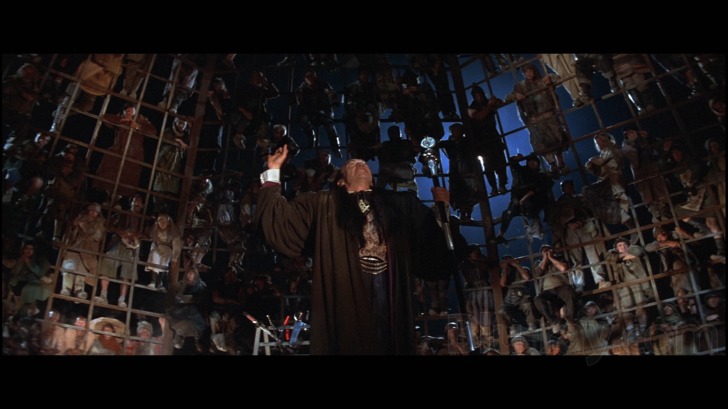
Picture the Thunderdome.  A shadow filed, iron caged, dome with a dirt floor the color of rust from recently spilled blood.  The moving shadows are created by the post-apocalyptic spectators hanging along the outside of the cage, clad in various leather costumes with open sores oozing puss.  You are Mad Max, you have a whistle, and your opponent is Master Blaster, a physically intimidating champion controlled by a small genius.  “Two men enter, one man leaves!  Two men enter, one man leaves.”

How does this apply to written discovery?  It’s a fun illustration as to how I view discovery.  That little whistle is my written discovery requests, the diminutive Master is opposing counsel, and Blaster is the opposing party.  As with Mad Max’s little whistle, well prepared written discovery can bring an opposing party to its knees, regardless of how good opposing counsel may be.

Written discovery serves a number of purposes, some more obvious than others, and is the primary means of steering a case.  Written discovery can accomplish the following goals:  1) Obtain previously unknown information; 2) Obtain previously unknown documents; 3) Obtain known information in admissible form; 4) Obtain known documents in admissible form; 5) Force opposing counsel (Master) to learn more about the case; 6) Force opposing party (Blaster) to do some work; 7) Get a better understanding of who I am dealing with (both Master and Blaster); 8) Get my case before the judge; and 9) Prepare for depositions (where the real work is done).  There are few other legal means for accomplishing so much.  As such, I draft my discovery requests with each of these goals in mind.

The primary goals of discovery are 1-4, obtaining information and documents in admissible form.  In law school, I was taught that these “primary goals” were the only goals to be accomplished in written discovery.  I was taught that all I had to do was serve well written discovery requests and, 30 days later, all would be revealed.  That’s funny.  I struggle to think of the last time that I learned something new and interesting as a result of written discovery.  Generally, I am happy to obtain documents in discovery and avoid having to authenticate what is already in my possession.  I will use these documents during depositions.

Written discovery is the best way to get on opposing counsel’s radar.  I want opposing counsel to be thinking about this case more than his/her other cases.  Whether it be plaintiff’s or defendant’s counsel, I want them to know that I am working the case, know more about it than they do, and will be pushing the case toward a resolution.  I like to give opposing counsel the impression that our case together is the only case I have to work.  Although results vary, I get the impression that most opposing counsel endeavor to learn more about their case as a result of my well-prepared written discovery.  If opposing counsel knows more, then we can have a realistic discussion about the value of a claim.  My written discovery makes opposing counsel work the case and helps to advance the ball.

Layman hate written discovery.  Be it a first-time plaintiff or a seasoned litigant, they will marvel at my legalese, will balk at my interrogatories, and will throw their hands up in frustration trying to produce documents in response to my requests for production.  I do not ask for information or documents solely to create work.  I seek very specific, very relevant information.  Those attorneys who cast a wide net in written discovery are being lazy and do not get the point.  Remember, I rarely find something new through discovery.  My requests are so specific as to be beyond a reasonable objection, and they require the opposing party to do some work.  By making the opposing party work, I force them to learn whether or not they will be capable of proving their claims or defenses, and I make them ask themselves whether they want to keep fighting this fight.

Through written discovery, I learn who I am dealing with.  I could be wrong about Master Blaster.  If my opponent does not make form objections, provides direct responses, and produces well organized documents, I will take note that my client and I are in for a real battle.  This will certainly affect strategy and odds of success.  On the other hand, if my opponent asks for five extensions, makes senseless objections, and produces hardly anything, I will get exponentially more aggressive, e.g., Mad Max grabs the sledgehammer after blowing his whistle and starts thumping Blaster in the head.

I hesitate to add a motion to compel as a reason to serve written discovery, but it is worth mentioning.  Sometimes I know that Master Blaster is just trying to be intimidating.  I know that they cannot provide reasoned responses or produce responsive documents.  I then need to show this disability to the court.  When taken to the extreme, I have been successful in obtaining sanctions, recovering my client’s attorneys’ fees for all of written discovery.  In most instances, I have been able to get what I want and move on to depositions.

Depositions are the real reason I serve written discovery.  My written discovery provides a road map for my depositions.  I use the same outline for my depositions as I do for my written discovery.  I use what answers I have received to formulate my leading questions.  I use the opposition’s documents as my primary exhibits, and I use the witness to prove up every document that I use.  Produced documents may be self-authenticated, but they still need to get past the hearsay rule.  Preparing really good written discovery requests makes taking depositions much easier and far more effective.  I have learned something new and interesting in nearly every deposition I have taken.  My depositions would be far less successful if I did not serve good written discovery requests.

    That is pretty much the extent of my advice using the Mad Max analogy.  I would like to say that winning a case is like blowing up the Thunderdome and ending Tina Turner’s reign of terror, but that’s really a stretch.

Read more

Attention All Social Hosts:  Make Sure It’s A Happy New Year

House-partyThrowing a holiday party this year in your home?  Having guests over where alcohol will be served?  If so, then you know it’s always possible that someone is going to drink too much.  And you know things can get out of hand if that occurs.  Now you’ll probably get over it if someone throws up on your new rug or trips over the dog, but what about when they get behind the wheel?  Can you be held liable if that someone drives drunk and ends up killing someone on the way home?

          Generally speaking, in Texas the answer is no, you can’t be held liable.  The landmark Texas case in this area of the law is Graff v. Beard (   and in case you were wondering, no, the “Beard” party in that case was not me or any of my extended family members as best I can tell).  In that case, the Texas Supreme Court held that a social host has no legal duty to prevent a guest who will be driving from becoming intoxicated or to prevent an intoxicated guest from driving.  That is still the law.  So if you serve alcohol to a guest and they end up harming themselves or someone else, you generally cannot be held liable for the harm done.

          But that doesn’t mean you shouldn’t take precautions when throwing a party or having a gathering in your home.  Keep in mind that if someone can still sue you under a premises liability theory if they become injured as the result of a defect on the premises that you were aware of but failed to warn them about. So consider gathering all of your guests together to warn them about dangerous conditions they may be unaware of or might overlook.

As for alcohol, the best policy might be to simply urge your guests to drink responsibly.  If you try to do too much, you might find yourself in hot water if you don’t do what you set out to do.  In a case decided just last year by the Texas Supreme Court, Nall v. Plunkett, the Court dealt with a situation where some homeowners were sued after they held a New Year’s Eve party where they instituted a rule that anyone remaining in their home after midnight had to stay overnight.  Someone broke the rule and tried to drive home after midnight, and another guest tried to stop them and became severely injured.  Although the Court ultimately ruled in favor of the homeowners, it did so based on procedural grounds.  The Court did not reach the merits of the case.  The general rule is that if you undertake a duty, you must do so non-negligently.   So for now, the best practice is to use your best judgment and be careful if undertaking any additional duties not otherwise imposed by the law.

Don’t drink and drive.  Have a safe and Happy New Year from all of us at Saunders, Walsh & Beard!

Written By: Alex Beard

Read more