Clearing Title: The “Bond to Indemnify Against Lien” under Chapter 53
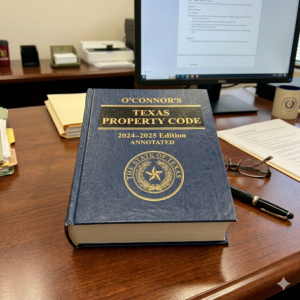 In the high-stakes world of Texas real estate and construction, a mechanic’s lien can bring a project to a grinding halt. Whether you are a developer trying to close a construction loan or a homeowner attempting to sell your property, a filed lien affidavit acts as a cloud on the title that most title companies will not ignore. However, the Texas Property Code provides a powerful, yet often misunderstood, mechanism to “remove” the lien from the property without necessarily paying the claimant immediately: the Bond to Indemnify Against Lien. Found in Subchapter H of Chapter 53 of the Texas Property Code, this process is colloquially known as “bonding around” a lien.
What is a Bond to Indemnify?
A Bond to Indemnify Against Lien (BTIL) is a formal document filed in the real property records where the lien is recorded. It essentially substitutes the credit of a corporate surety for the value of the real estate. Once a valid bond is recorded, the notice is served, and the notice (with a copy of the bond) is recorded once again, the lien is “discharged” from the property itself and attaches to the bond. This allows the owner to sell or refinance the property free and clear of the lien claim.
The Statutory Requirements (Section 53.172)
To be effective, the bond must strictly comply with the requirements of the Texas Property Code. It must:
- Describe the property subject to the lien.
- Refer to the lien claimed in a manner sufficient to identify it.
- Be in an amount specified by the statute (discussed below).
- Be executed by the party filing the bond as principal and a corporate surety authorized to do business in Texas.
- Be conditioned that the principal and sureties will pay the lien claimant the amount of the lien plus costs if the claim is proven to be valid.
Calculating the Bond Amount
One of the most common questions is: “How much does the bond need to be?” Section 53.172(3) provides a specific formula. The bond must be in an amount that is:
Amount = 1.5 × (Lien Claim) (if the claim is $40,000 or less)
Amount = 2.0 × (Lien Claim) (if the claim exceeds $40,000)
Wait, there is a cap. The bond amount is double the lien claim or $40,000 plus the lien claim, whichever is less, for claims over $40k. (Note: Always consult the current statute as legislative updates can shift these thresholds.)
The Cost of Obtaining a Bond
Obtaining a bond is not free, and the costs can be split into two categories: the premium and the collateral. The premium is the fee paid to the surety company to issue the bond, typically ranging from 1% to 3% of the total bond amount per year, depending on the applicant’s creditworthiness. However, because a mechanic’s lien bond represents a high risk—essentially a financial guarantee that the surety will pay if the principal loses the lawsuit—sureties often require the principal to post collateral. This “trust” amount is frequently 100% of the bond amount, held in a letter of credit or a cash deposit. While large, well-capitalized contractors may be able to secure these bonds on “open account” (without collateral) based on their financial statements, homeowners and smaller subcontractors should be prepared to set aside significant liquidity to satisfy the surety’s indemnity requirements.
The Importance of Notice (Section 53.176)
Simply filing the bond with the county clerk is not enough. After the bond is filed, the county clerk issues a certificate of notice. The party filing the bond must then serve the bond and the certificate on the lien claimant via certified mail. After notice is given, the notice and another copy of the bond must be recorded. Failure to strictly follow the notice/recording requirements can render the bond ineffective, leaving the lien attached to the real property.
Why Use a Bond?
From an owner’s or general contractor’s perspective, the bond offers several strategic advantages:
- Title Clearance: It allows for the immediate transfer or financing of the property.
- Leverage: It forces the lien claimant to sue on the bond, which may have different statute of limitations implications.
- Dispute Resolution: It allows the parties to fight over the “merits” of the claim (e.g., was the work actually done?) without the property being held hostage in the meantime.
Final Thoughts
While “bonding around” a lien is a standard industry practice, it is a technical process. If the bond is deficient in amount or if notice is not properly served, the cloud on the title remains. Furthermore, for the lien claimant, the bond is often a positive—it ensures that if they prove their case, there is a solvent surety standing behind the judgment.
Whether you are a property owner who needs to bond around a lien to clear your title, or a contractor needing to pursue a claim against a surety bond, you need experienced guidance to protect your interests. Contact us today to speak with Mr. Jacob D. Thomas, a Texas attorney Certified in Construction Law by the Texas Board of Legal Specialization at Saunders | Walsh.
Disclaimer: This blog post is for educational and informational purposes only and does not constitute legal advice. Reading a blog post does not create an attorney-client relationship. Always consult with a qualified, Board Certified construction attorney regarding your specific legal matters.